The Loud Kid
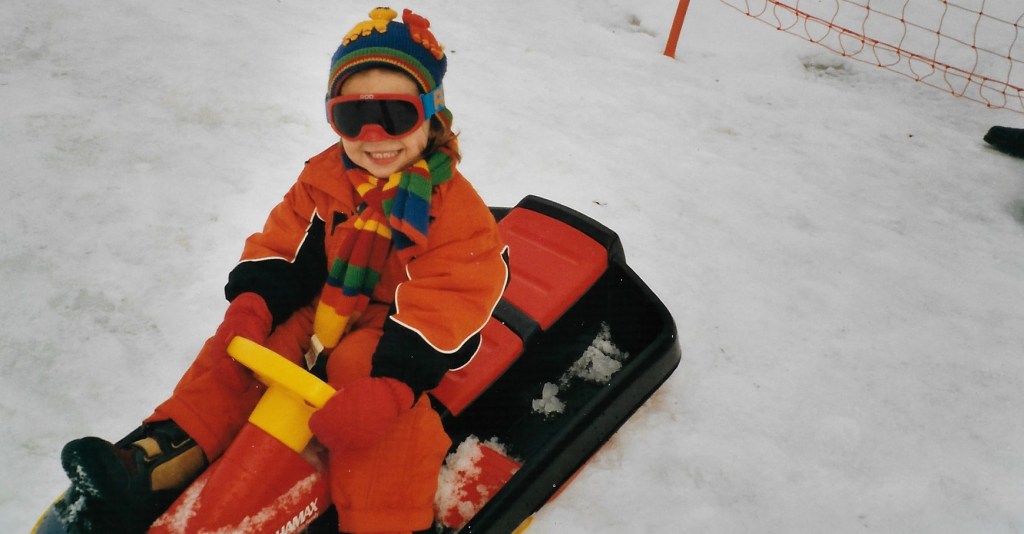
When I was a child, I didn’t know I had ADHD.
I was just “that kid”.
The loud one.
The dreamy one.
The one with the worst handwriting you can imagine — so bad that no one could read what I had written.
In my school reports, teachers wrote that I was pure chaos.
People often thought I was extremely well-read because I talked so much and so fast.
In reality, I barely read any books at all.
My teachers gave me stickers when I managed to change from my outdoor shoes into my slippers — and back again. Most days, I either walked home in my slippers, sat in class with my shoes on, or forgot something entirely. After sports class, it was almost guaranteed that I had left something behind or forgotten to fully get dressed.
This wasn’t an exception.
This was my life.
Growing Up Feeling “Different”
Studying made me furious.
I threw books at my mother because I couldn’t concentrate, couldn’t understand, couldn’t do what was expected of me. I was deeply frustrated.
At the same time, I had an enormous imagination.
I could talk to myself for hours, inventing entire worlds and stories.
I had endless energy. I wanted to become a children’s reporter and even did interviews on television.
And yet, there was always a part of me that didn’t work like the others.
ADHD was never mentioned during my school years.
I think partly because I was a girl.
I wasn’t aggressive. I was dreamy, messy, forgetful.
As I got older, school became harder. My parents were regularly informed. Teachers wrote letters home. Not because I was bad — but because I couldn’t sit still, couldn’t stop talking, couldn’t just be quiet.
I eventually made it into high school — and then dropped out. Too many subjects. Too many materials. Too much to manage. I sat in the back row trying desperately to focus, and it simply didn’t work.
Trying to Function Anyway
During my apprenticeship, it looked better from the outside. My grades were good.
But in an eight-hour workday, I could focus for maybe two hours. The rest of the time, I stood up, walked around, talked to people, fidgeted.
I thought this was normal.
I thought I just had to pull myself together.
My whole life, I believed I needed more discipline. More willpower.
And no matter how hard I tried, I couldn’t make it work.
In relationships and friendships, it was the same.
I felt everything intensely. Where others felt one emotion, I felt thirty.
I was quick to anger, quick to sadness, constantly overwhelmed.
I spent more time in my head, daydreaming, than in reality — while still trying to function in a society, a structure, a life that wasn’t built for me.
And I had no idea what was wrong.
Looking for Answers (Without Knowing the Question)
I went to different therapists over the years, always for different reasons.
I couldn’t sleep.
I went for three-hour walks every evening because my thoughts wouldn’t stop.
I lived in imagined scenarios that didn’t exist.
I wanted to listen to my friends, to be present — and couldn’t.
At work, people told me things I immediately forgot.
I sat down to study and physically couldn’t start.
I tried to clean my room and ended up holding ten unrelated objects, moving in circles.
My room reflected my mind.
Shoes on my bedroom pillow.
A book in the fridge.
No memory of how they got there.
Not sometimes.
Not on bad days.
Always.
I lost at least one phone per year. I regularly had to block all my cards. Not because I was careless once — but because it simply didn’t work.
At home, I needed constant background noise: TV, podcasts, something always playing — otherwise I was understimulated.
At the same time, crowded rooms overwhelmed me completely.
The Moment Everything Clicked
Years later, I listened to a podcast episode by Leon Windscheid, where a woman talked about her ADHD — about the chaos in her head, about overstimulation, about her life.
She wasn’t telling her story.
She was telling mine.
I did what ADHD brains do best: I hyperfocused.
For days, I read everything I could find about ADHD in women.
And suddenly, everything made sense.
I went to the ADHD outpatient clinic in Basel. After about thirty minutes, the doctor looked at me and said:
“Ms., may I prescribe you medication?
We usually do extensive diagnostics, but since you walked into this room, I can feel the ADHD basically in the air.”
What This Blog Is About
That moment wasn’t the end of the story.
It was the beginning.
I was 22 when everything changed.
Now, almost five years later, I’m close to 27 — and I’ve learned more about myself than I ever expected.
This blog is about what came next:
what ADHD actually feels like,
how it affects everyday life, work, emotions, and relationships,
and what I’ve learned along the way.
I’m sharing this to create understanding, to educate, and to remind us that we’re not alone in this.
This is where the story continues.
 adhdunmasked.me
Leave a comment